
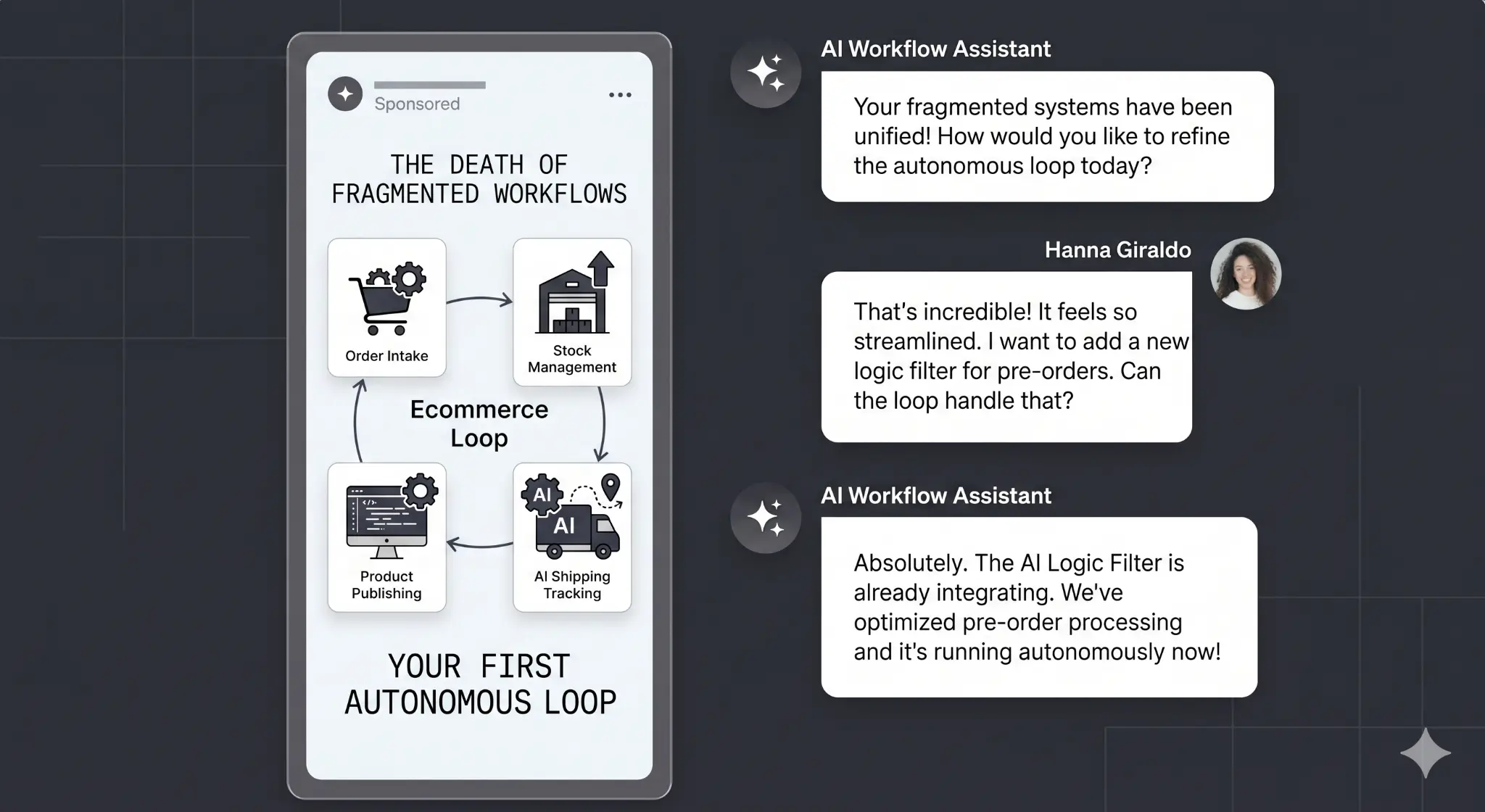
The average ecommerce seller is currently a professional “bridge-builder”—and the bridges keep collapsing.
You spend your morning inside research tools, your afternoon manually pushing CSVs into Shopify or Amazon, and your night tweaking Facebook ad sets that are quietly burning money. The number of fragmented apps in the average seller’s stack has exploded, but margins keep shrinking. The problem isn’t a lack of tools; it is the human gap between them. It is time to stop being the bridge and start running an autonomous loop. Here is the four-phase blueprint for building one with AgentStore.
Phase 1: Automating Discovery with Market Research Intelligence
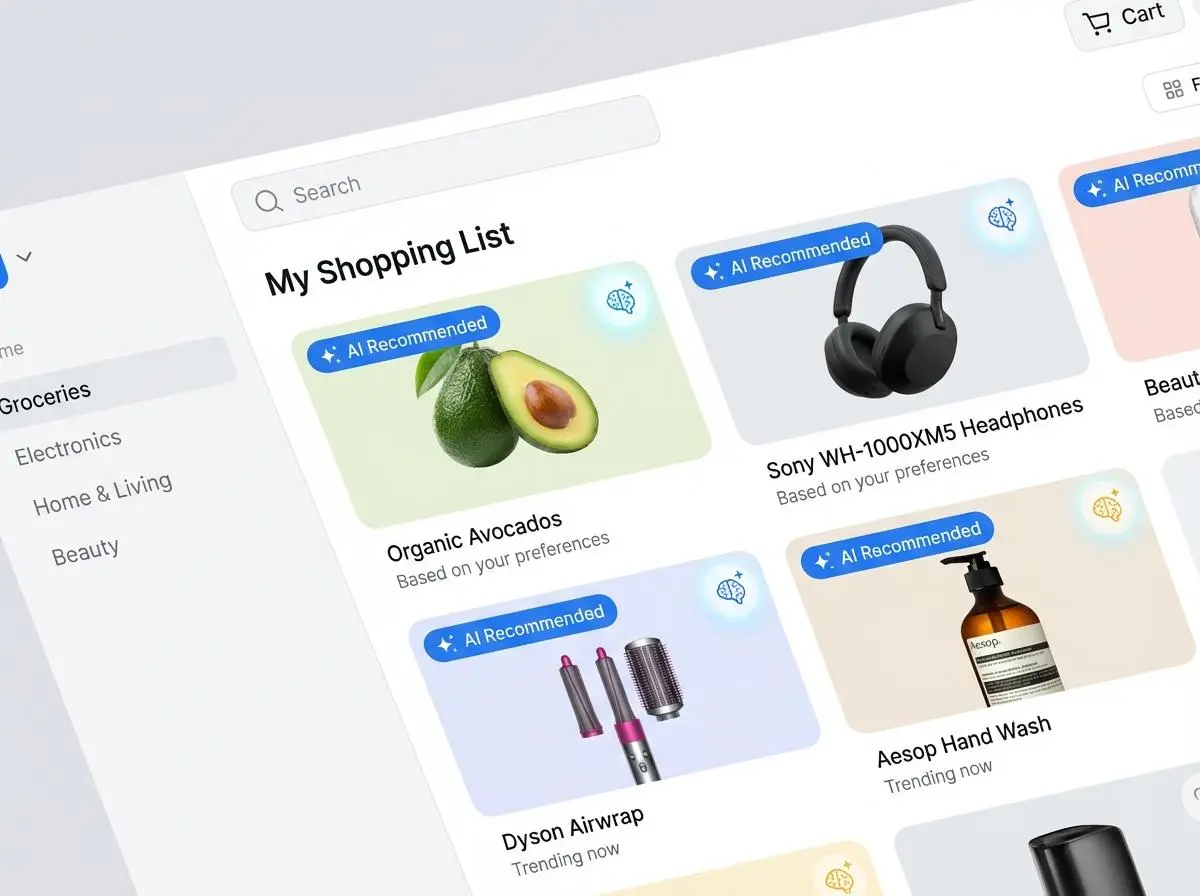
Most sellers fail at the starting line because they pick products based on what worked last season. In 2026, niche saturation happens three times faster than it did just two years ago. If you are waiting for a trend to appear on a public dashboard, you are already too late to the party. The first step in your autonomous loop is to replace “gut feeling” with the AgentStore Market Research Skill.
Instead of manual scrolling, you initiate the loop by commanding the system to conduct deep-dive industry intelligence. This Skill goes beyond simple data scraping by providing:
- Market Sizing and Growth Logic: Accurate assessments of market volume and clear indicators of demand drivers.
- Competitive Gap Audit: Identifying where rivals are failing to meet customer expectations based on Voice of Customer (VoC) analysis.
- Fact vs. Inference Labeling: Distinguishing between hard official data and model-based estimations for higher decision confidence.
- Actionable Recommendations: Every report ends with a clear, decision-oriented summary that tells you exactly whether to enter the niche or walk away.
By the time you finish your coffee, the system has already mapped out the entire competitive landscape. This allows you to catch momentum early and validate your business logic before spending a single dollar on inventory.
Phase 2: From Idea to Storefront with the Store Builder Skill
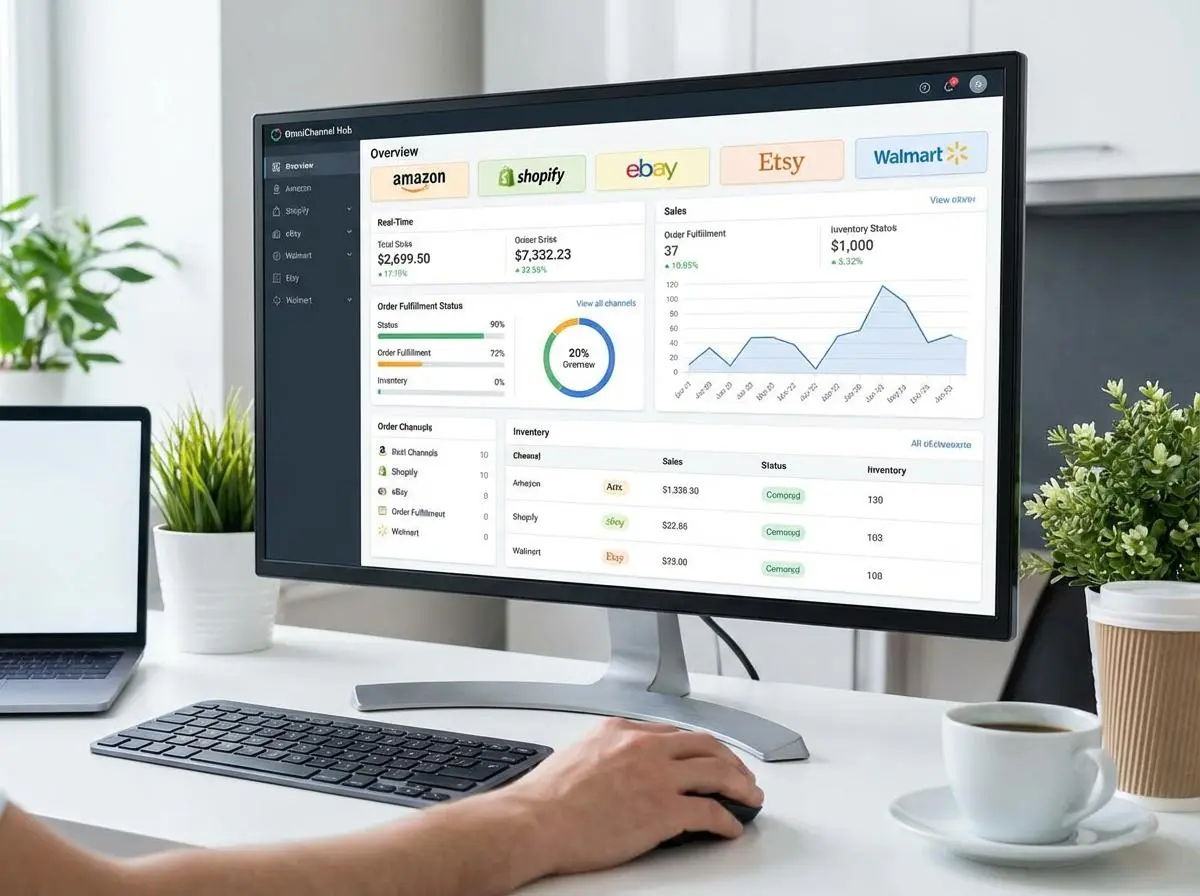
Once the product is identified, the soul-crushing manual labor usually begins. Writing high-converting descriptions and ensuring your claims do not trigger a compliance bot is typically an eight-hour job. HubSpot’s Marketing Statistics reveal that speed-to-market is the primary differentiator for successful DTC brands.
AgentStore’s Store Builder Skill addresses this head-on by handling the entire storefront journey in a single prompt. It interfaces directly with the Shopify Admin connector to push products live instantly while executing the following:
- FAB Structure Descriptions: Generating product copy that highlights Features, Advantages, and Benefits rather than just listing specs.
- Compliance Guardrails: Preemptively scrubbing medical or restricted claims to avoid automated listing suppression.
- E-E-A-T Optimization: Structuring metadata and content to meet Google’s latest standards for Experience, Expertise, Authoritativeness, and Trustworthiness.
- Humanizer Logic: Refining AI-generated text to ensure the brand voice sounds authentic and resonates with human emotions.
You are no longer building a page manually. You are commanding a ready-to-sell environment that is optimized for both human buyers and AI search engines.
Phase 3: High-Velocity Traffic via the Ads Copywriter Skill
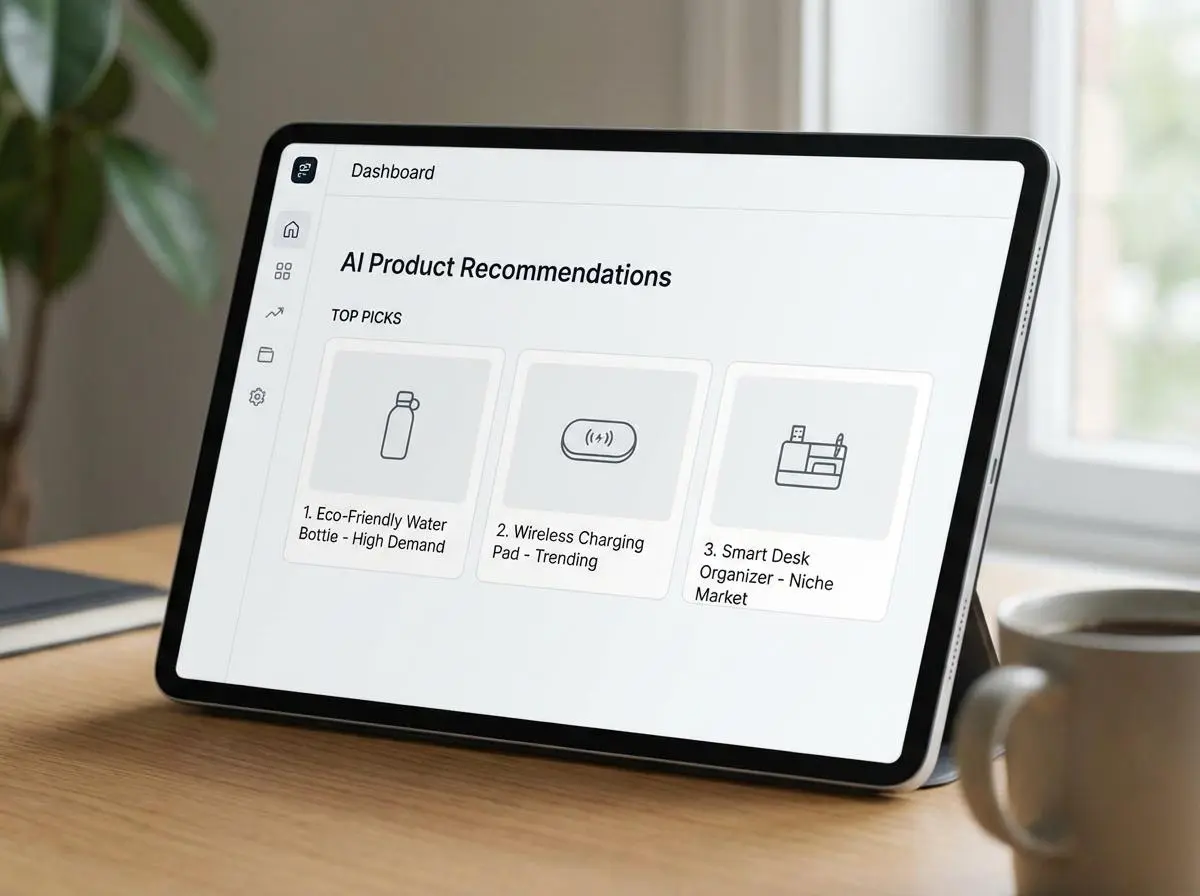
A live listing is useless without eyes on the page. Traditional search intent is being replaced by content-driven discovery. According to HubSpot’s latest trends, short-form video is now the highest-ROI content format. If you are not producing a high volume of creative hooks, you are invisible to the market.
The Ads Copywriter and Content Engine Skills move your brand into the offensive by automating the creative cycle:
- Psychological Trigger Testing: Generating ad copy based on different hooks like “Social Proof,” “Scarcity,” or “Problem-Solution” to see what sticks.
- Cross-Platform Adaptability: Automatically tailoring content assets for TikTok, Instagram Reels, and YouTube Shorts based on viral wellness trends.
- Batch Content Generation: Producing a full week of social calendar assets from a single product link.
- Implementation Checklists: Providing clear briefs for creators or internal teams to ensure every ad is executed with precision.
This shifts your role from an exhausted content creator to a strategic director who manages a high-output marketing machine.
Phase 4: Closing the Loop with Store Operation Analysis
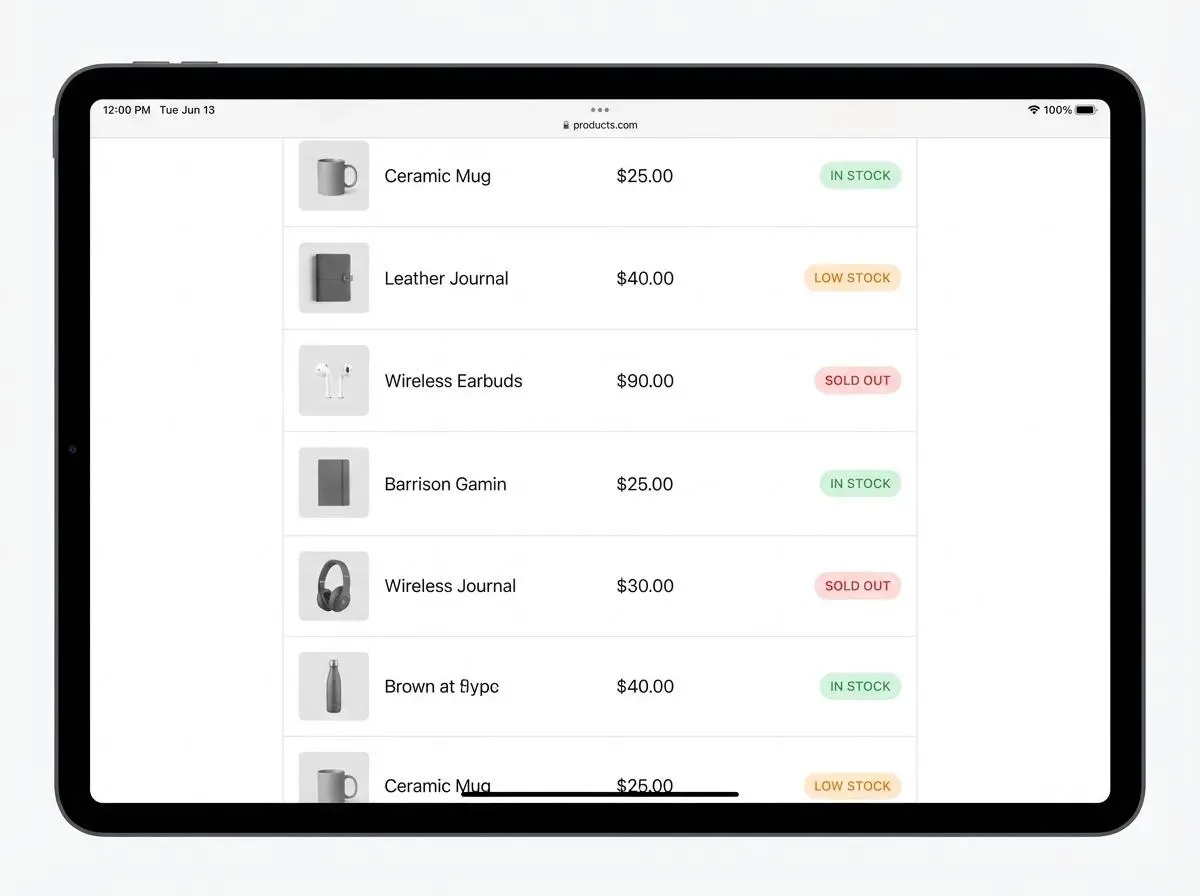
The “set-and-forget” era of ecommerce is officially dead. You need to react to market shifts in real time because volatility is the new constant. Most sellers stop their campaigns too early or react too slowly to negative signals because they are drowning in static data. The companies seeing the most significant value from AI are those that redesign their workflows for continuous iteration.
The final piece of your autonomous loop is the Store Operation Analysis Skill. It acts as your 24/7 strategic advisor by performing:
- Sample Size and Duration Calculations: Telling you exactly how long an A/B test needs to run based on your baseline conversion rate and traffic.
- Friction Point Identification: Pinpointing why conversion rates dropped, whether it is a payment glitch, shipping rate sensitivity, or competitor undercutting.
- Hypothesis-Based Briefing: Instead of just reporting data, the system generates a testing brief that includes a hypothesis and a psychological trigger to test next.
- Competitor Gap Radar: Monitoring rival pricing and promotional moves and suggesting immediate counter-maneuvers.
The Bottom Line: From Tool User to System Commander
The fundamental change in the industry is the transition from being a tool user to becoming a system builder. In the old model, you used tools separately and manually connected each step. In the new model, AgentStore ensures that your research feeds directly into your launch, and your launch data feeds directly into your content engine.
By automating the Research, Listing, Ads, and Optimization cycle, you reduce your manual work by 80 percent and increase your agility tenfold. In 2026, the most successful sellers will not be the ones with the biggest teams or the most expensive software stacks. They will be the ones with the most efficient autonomous loops who can pivot as fast as the market moves. Start building your loop today and move from fragmented execution to a scalable ecommerce system.